

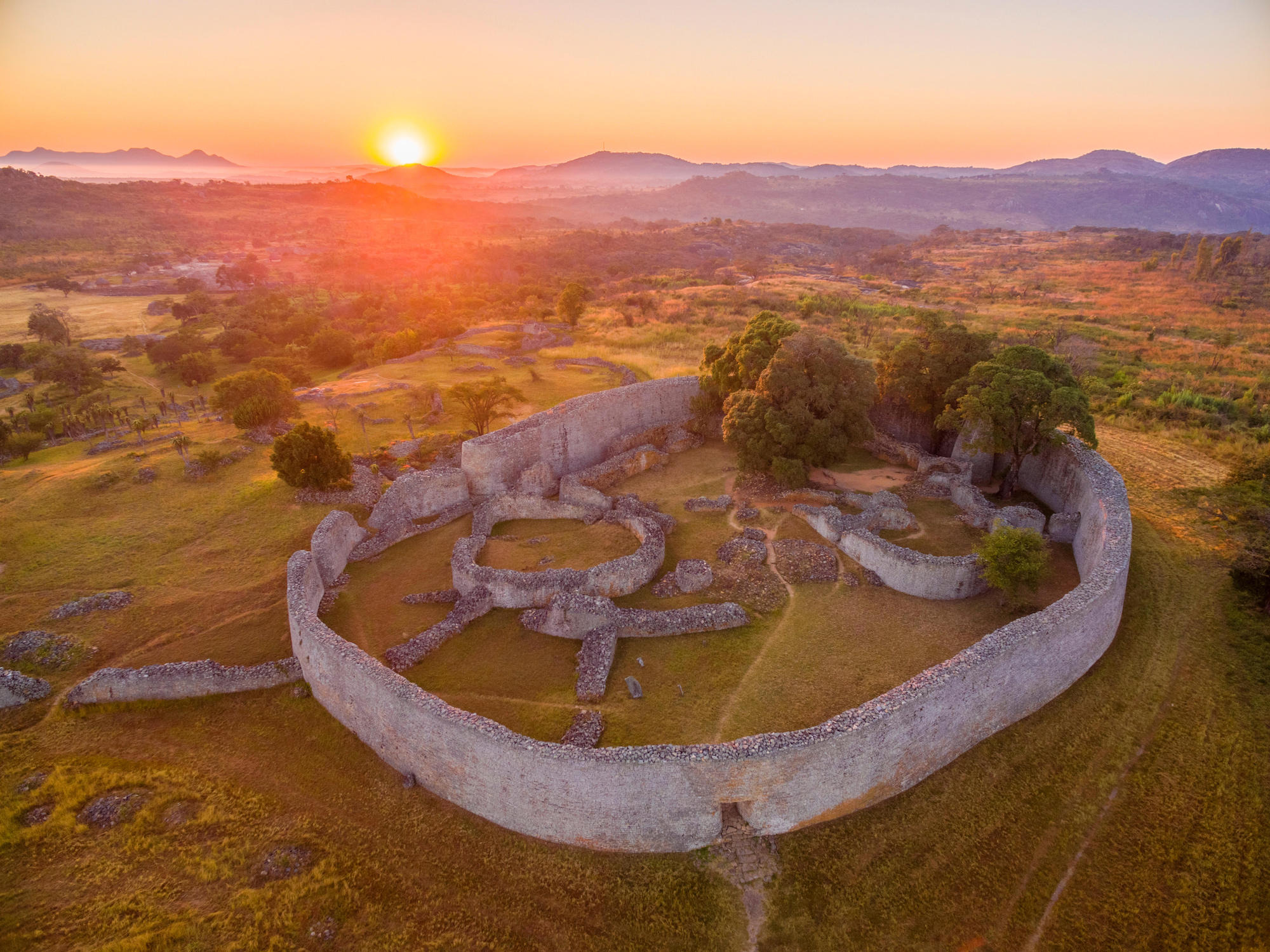
What kind of society cuts millions of granite blocks, stacks them higher than a modern six-storey building, and leaves no written record explaining how it was done?
On the southern Zimbabwean plateau, the ruins of Great Zimbabwe answer that question with stone, silence, and scale.
Great Zimbabwe was not an accident, a mystery race, or a lost colony from elsewhere. It was a carefully planned African city, built between the 11th and 15th centuries by the ancestors of the Shona people, at the height of southern Africa’s power and trade. Every wall still standing is proof of local knowledge, skilled labour, and political organization that European writers once refused to acknowledge.
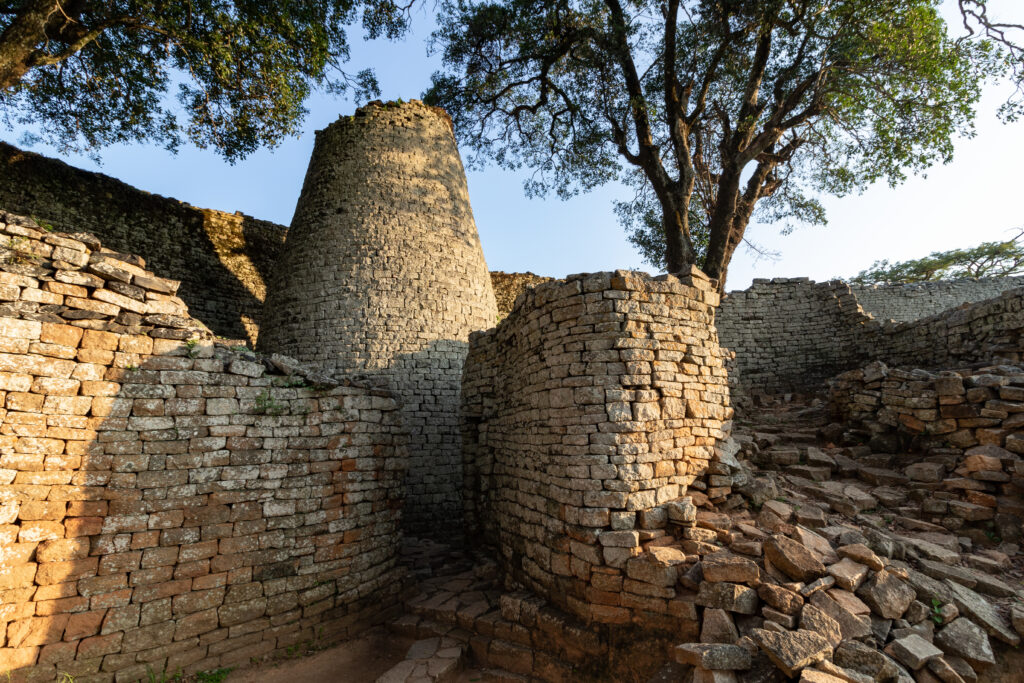
The city sits on a granite-rich landscape, and that geology shaped everything about how it was built. Granite naturally fractures into flat slabs when exposed to heat and rain over long periods. Builders did not quarry stone with metal tools. They selected naturally split granite, trimmed it with hammerstones, and sorted pieces by size. Smaller blocks formed stable inner layers, while larger, flatter stones created smooth outer faces. This method produced walls that could flex slightly under pressure, which is why they still stand centuries later.
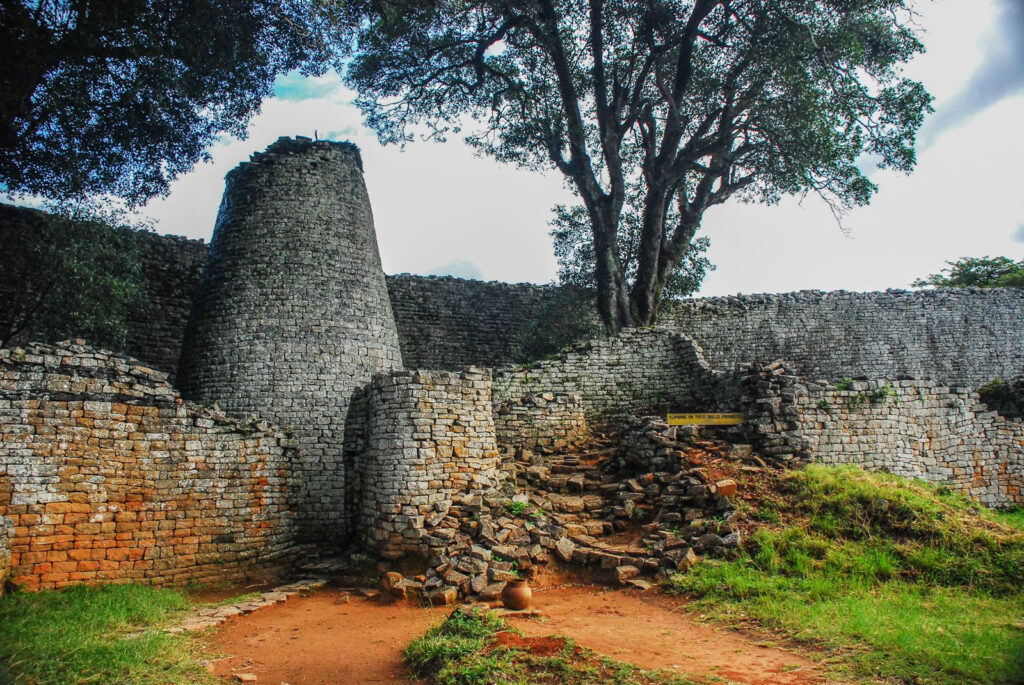
No mortar was used, but that does not mean the construction was simple. Dry-stone walling demands precision. Each stone must lock into the next, distributing weight evenly downward. A single mistake can destabilize an entire wall. At Great Zimbabwe, some walls rise over 10 meters high and stretch for hundreds of meters, curving gracefully rather than standing rigidly straight. Those curves were not decorative accidents. They increased structural strength and reduced collapse.
The most famous structure, the Great Enclosure, is the largest stone building in pre-colonial sub-Saharan Africa. Its outer wall encloses a space larger than a football pitch and contains a mysterious conical tower built solid from stone. The tower has no door, no window, and no clear internal space. Many scholars believe it symbolized authority, abundance, or royal power rather than serving a practical function. Its presence alone suggests that architecture at Great Zimbabwe carried political and symbolic meaning, not just shelter.
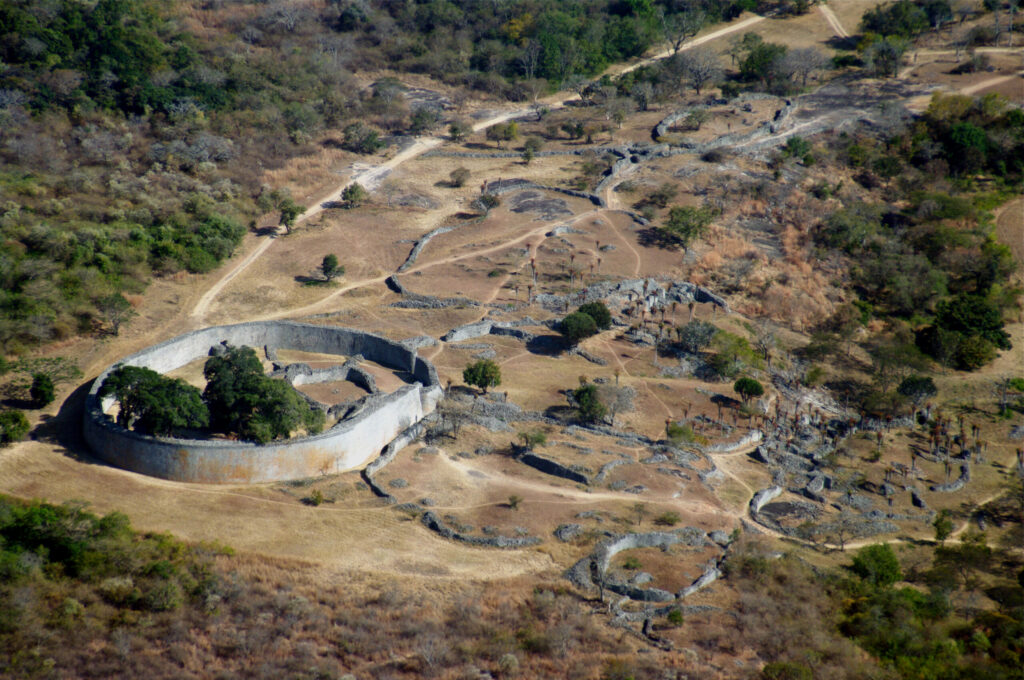
Construction followed social hierarchy. Archaeological evidence shows that elite residents lived within the stone enclosures, while commoners occupied dhaka houses made of earth and wood outside the walls. The stone was not for everyone. It was reserved for kings, ritual spaces, and administrative centers. This selective use of stone signals a stratified society with leadership capable of mobilizing and controlling large labor forces.
Building Great Zimbabwe required more than stone. It required food security. Thousands of workers could not shape and place blocks unless agriculture produced reliable surplus. The surrounding plateau supported cattle herding and grain farming, especially sorghum and millet. Cattle were not just food. They were wealth, status, and political currency. Control of cattle meant control of people.
Trade made the city powerful and made its construction possible. Great Zimbabwe sat at the center of long-distance trade routes connecting the interior of southern Africa to the Swahili Coast and the Indian Ocean world. Archaeologists have found Chinese porcelain, Persian glass beads, and Middle Eastern ceramics at the site. Gold mined nearby was exchanged for luxury goods, which reinforced elite power and justified monumental building projects.
This trade wealth explains why the city expanded in stages. Early structures cluster around the Hill Complex, a rocky outcrop that likely served as the original royal and ritual center. Later, as power grew, builders constructed the Great Enclosure below the hill, then spread outward with additional walls and living areas. The city was not built all at once. It evolved with political authority.
European colonial narratives once claimed Great Zimbabwe was built by Phoenicians, Arabs, or even biblical figures, arguing that Africans could not have created such architecture. Those claims collapsed under archaeological evidence and were driven by racism, not science. Carbon dating, material culture, and oral traditions all point to indigenous African builders using local techniques refined over generations.
The builders also understood acoustics and visibility. Some stone passages narrow deliberately, forcing visitors to slow down and feel controlled. Elevated platforms overlook lower spaces, reinforcing authority through physical positioning. Stone was used not just to enclose space, but to choreograph movement and power.
Why did Great Zimbabwe decline? The stones do not say, but evidence suggests environmental pressure, overgrazing, and shifts in trade routes weakened the city’s economic base. As gold trade moved north and resources thinned, political power fragmented. The population dispersed, leaving the stone city behind as a symbol rather than a capital.
Yet Great Zimbabwe was not forgotten by its builders’ descendants. Shona oral traditions preserved its significance, even when the city was abandoned. The name “Zimbabwe” itself comes from the Shona phrase dzimba dzemabwe, meaning “houses of stone.” When modern Zimbabwe gained independence in 1980, the nation took its name directly from this ancient city, reclaiming history that colonial rule tried to erase.
Today, Great Zimbabwe stands as evidence that complex engineering, urban planning, and monumental architecture existed in Africa long before European contact. It challenges outdated ideas about technology and civilization. More importantly, it restores African agency to African history.
The stone walls were not built by mystery hands. They were built by people who understood their land, organized their society, and shaped stone into power.
