

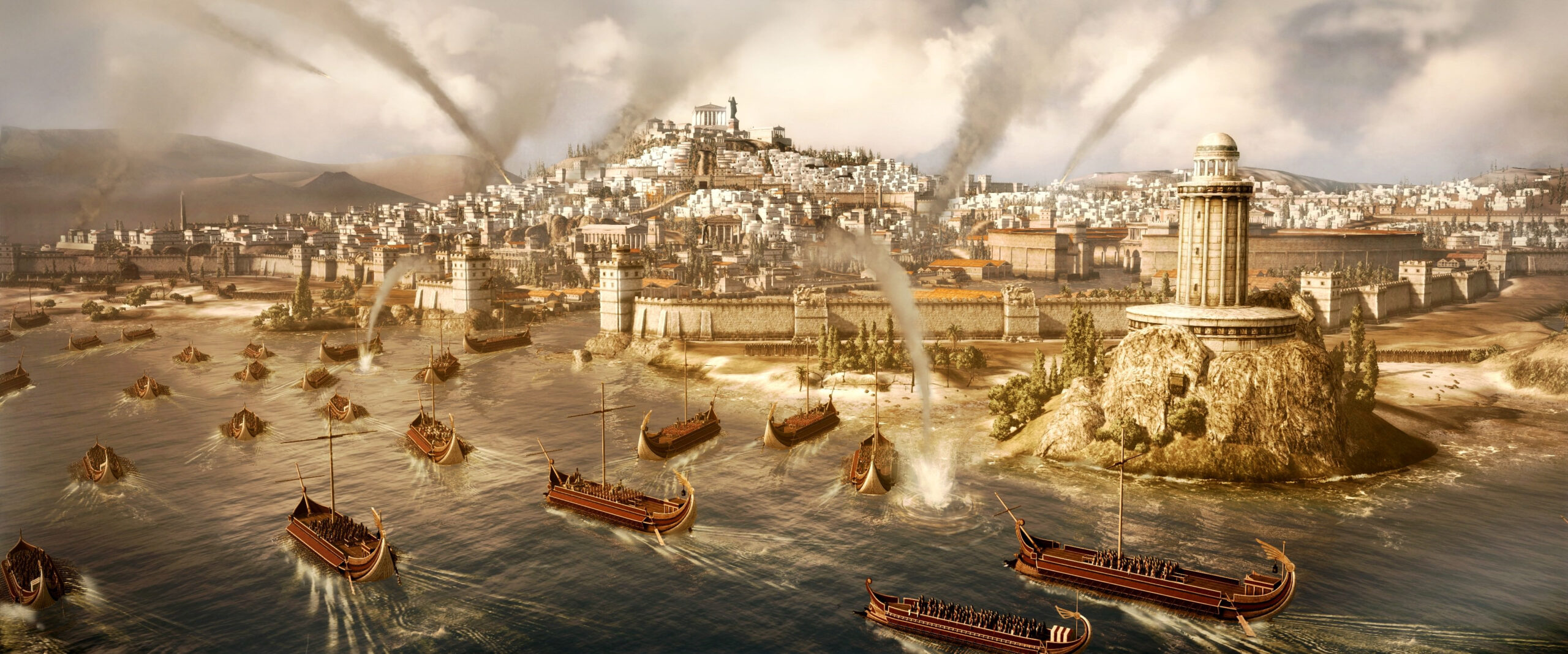
What does it take for an African empire to push Rome to the edge of collapse?
Picture a Mediterranean world where the most feared navy does not sail from Italy but from the North African coast, and where Roman senators lose sleep over a general who crosses the Alps with elephants. That empire was Carthage.
Carthage Before Rome Was Supreme
Carthage rose around 814 BCE on the coast of present-day Tunisia, founded by Phoenician settlers from Tyre. Unlike many ancient states built on conquest first, Carthage grew through trade. Its location gave it control of key Mediterranean sea routes, linking Africa, Europe, and the Near East. Carthaginian merchants moved silver from Iberia, gold from West Africa, grain from North Africa, and luxury goods across the ancient world.

This trade wealth allowed Carthage to build what mattered most in the ancient Mediterranean: ships. Its navy became the largest and most advanced of its time, making Carthage the undisputed maritime power long before Rome mastered the sea.
An African Power With a Global Reach
Carthage was not a city-state acting alone. It was the center of a vast African empire stretching across modern Tunisia, Algeria, Libya, southern Spain, Sardinia, and Sicily. Its influence reached deep into Africa through trans-Saharan trade routes, connecting the Mediterranean to inner African economies centuries before European colonial contact.
Unlike Rome, Carthage ruled indirectly. Local leaders kept power as long as trade flowed and loyalty remained intact. This system reduced rebellion and kept commerce steady, proving that Carthaginian power relied more on economic intelligence than brute force.
Rome Meets Its Match
Rome and Carthage were destined to collide. Both wanted control of Sicily, the Mediterranean’s most strategic island. The result was the Punic Wars, a series of conflicts that reshaped world history.
During the Second Punic War, Carthage produced one of history’s most brilliant military minds: Hannibal Barca. His decision to march an army, including war elephants, across the Alps into Italy remains one of the boldest campaigns ever attempted. For years, Hannibal defeated Roman forces on their own soil, exposing Rome’s weaknesses and nearly breaking its power.
Why Hannibal Terrified Rome
Hannibal did more than win battles. He shattered Rome’s belief in its own invincibility. Roman families feared his name so deeply that “Hannibal is at the gates” became a phrase of panic. His tactics at battles like Cannae are still studied in military academies today, making Carthaginian warfare a lasting contribution to global military strategy.
The Fall of Carthage Was Political, Not Just Military
Carthage did not fall because it lacked intelligence or skill. It fell because Rome learned, adapted, and eventually outlasted it. Internal divisions within Carthage, combined with Rome’s relentless expansion, weakened African resistance.
In 146 BCE, Roman forces destroyed Carthage completely. The city was burned, its population killed or enslaved, and its territory turned into a Roman province. Rome understood that Carthage’s greatest weapon was not its army but its economic network, and it chose annihilation over coexistence.
Carthage’s Erased Legacy
Roman writers controlled the historical narrative that followed. Carthage was painted as cruel, greedy, and dangerous, while Rome cast itself as the civilizing force. This bias buried Carthage’s African identity and downplayed its innovations in trade, governance, shipbuilding, and diplomacy.
Modern archaeology tells a different story. Carthage was a sophisticated African empire that mastered global trade, maritime technology, and multicultural rule long before Rome became dominant.
Why Carthage Still Matters
Carthage challenges the myth that Africa played a passive role in ancient world power. It proves that African empires shaped global economics, warfare, and politics at the highest level. Rome did not rise alone; it rose by defeating one of the most advanced African civilizations ever built.
