

That question unsettles the old myth that mathematics arrived in Africa with Europeans. Long before colonial classrooms, African societies developed complex mathematical systems grounded in observation, trade, architecture, astronomy, and survival. These were not abstract games. They were tools for governing cities, timing seasons, building monuments, and mapping the heavens.
Mathematics Written in Bone and Stone
Around 20,000 years ago, someone near Lake Edward in present-day Congo carved a series of precise notches into a bone. Known today as the Ishango Bone, it shows clear numerical groupings and patterns that suggest counting, doubling, and possibly base-10 or base-12 systems. This is one of the oldest known mathematical artifacts in the world, and it was made in Africa.
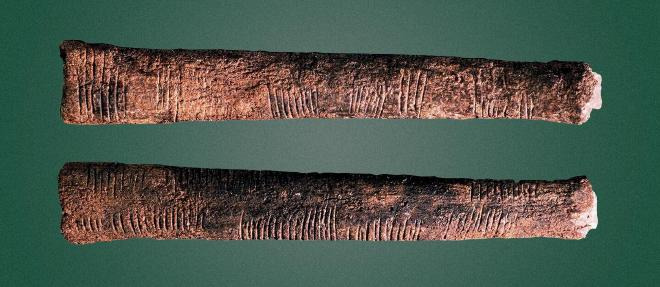
The markings are not random scratches. They show intention, structure, and numerical thinking. Whoever made them was already working with numbers as concepts, not just tallies.
Ancient Egypt and the Science of Numbers
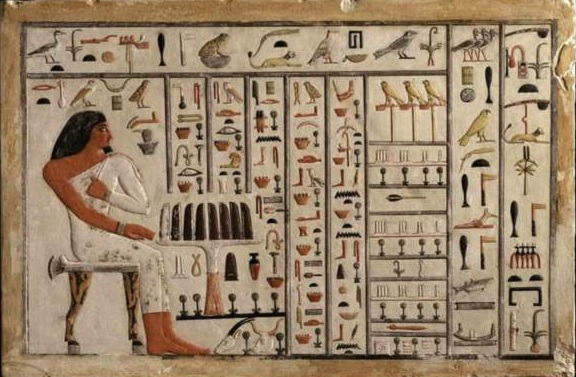
In the Nile Valley, mathematics became a state tool. Ancient Egyptian scribes used arithmetic, geometry, and fractions to manage taxes, distribute food, and design massive architectural projects. The Rhind Mathematical Papyrus, dated to around 1650 BCE, contains practical math problems involving area, volume, ratios, and linear equations.
Egyptians worked comfortably with fractions, especially unit fractions, and applied geometry to land measurement after annual Nile floods erased boundaries. The accuracy of pyramid construction proves their mastery of angles, proportions, and spatial reasoning. This was mathematics tested against stone, gravity, and time.
Fractals in African Design
Across West and Central Africa, mathematics appeared in patterns that Europeans only formally described centuries later. Many African villages, textiles, and artworks follow fractal geometry. Houses are arranged in repeating patterns. Courtyards mirror family structures. Designs scale outward with mathematical consistency.
The Ba-ila, Yoruba, and Ashanti, among others, embedded recursive logic into architecture and art. These patterns were not decorative accidents. They reflected social organization, spiritual beliefs, and efficient land use. Modern mathematicians now recognize these designs as advanced examples of self-similarity and scaling.
Indigenous Number Systems and Base Logic
African societies used diverse number systems adapted to their needs. Some communities worked in base-5, base-10, base-12, or hybrid systems. The Yoruba counting system, for example, uses subtraction and addition in sophisticated ways, showing strong mental arithmetic skills.
These systems were ideal for trade, market pricing, timekeeping, and record-keeping. Mathematics lived in language, not chalkboards. Children learned it through daily exchange, storytelling, and ritual.
Astronomy, Calendars, and Timekeeping
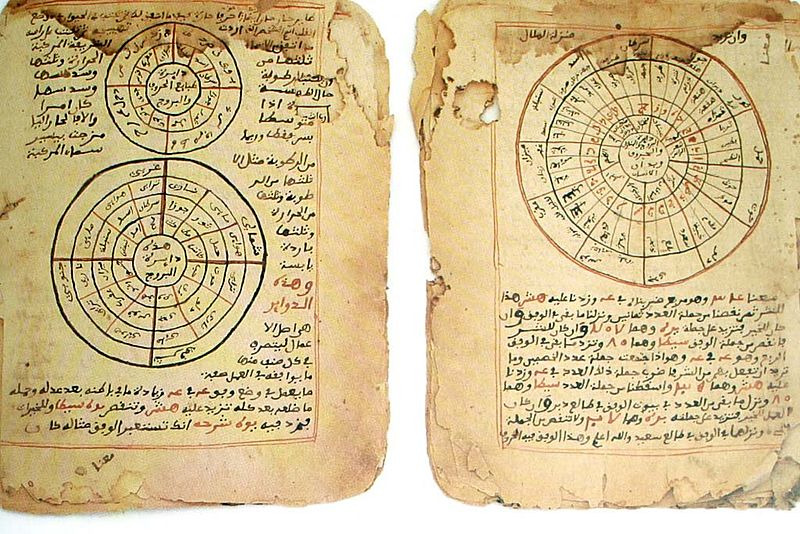
Mathematics also guided African astronomy. The Dogon of Mali tracked the movements of stars with remarkable precision, including knowledge of Sirius and its companion star. In Ethiopia and Nubia, calendars were developed to track agricultural cycles and religious festivals.
Stone circles, such as those at Nabta Playa in southern Egypt, align with solstices and seasonal changes. These alignments required careful measurement, counting, and long-term observation. This was mathematics written into the landscape.
Trade, Accounting, and Applied Mathematics
From the trans-Saharan trade routes to Swahili Coast city-states, African merchants relied on mathematics to calculate distance, weight, value, and profit. Cowrie shells, gold dust, and metal weights required standardized measures and numerical agreement.
The Akan gold weights of Ghana are a striking example. Each weight followed precise proportional rules, allowing fair trade across regions. Commerce demanded accuracy, and African traders delivered it.
Why This History Was Ignored
European colonial narratives often dismissed African knowledge systems to justify domination. Mathematics was presented as a European gift rather than a shared human achievement. Oral traditions and non-written systems were labeled primitive, despite their complexity.
This erasure shaped global education and continues to affect how African contributions are taught, or ignored, today.
Reclaiming Africa’s Mathematical Legacy
African mathematics before European contact was practical, theoretical, visual, and deeply connected to daily life. It solved real problems and shaped civilizations. Recognizing this history does more than correct textbooks. It restores intellectual dignity and challenges narrow ideas about where knowledge comes from.
The question is no longer whether Africa had mathematics. The evidence is overwhelming. The real question is why the world took so long to admit it.
