

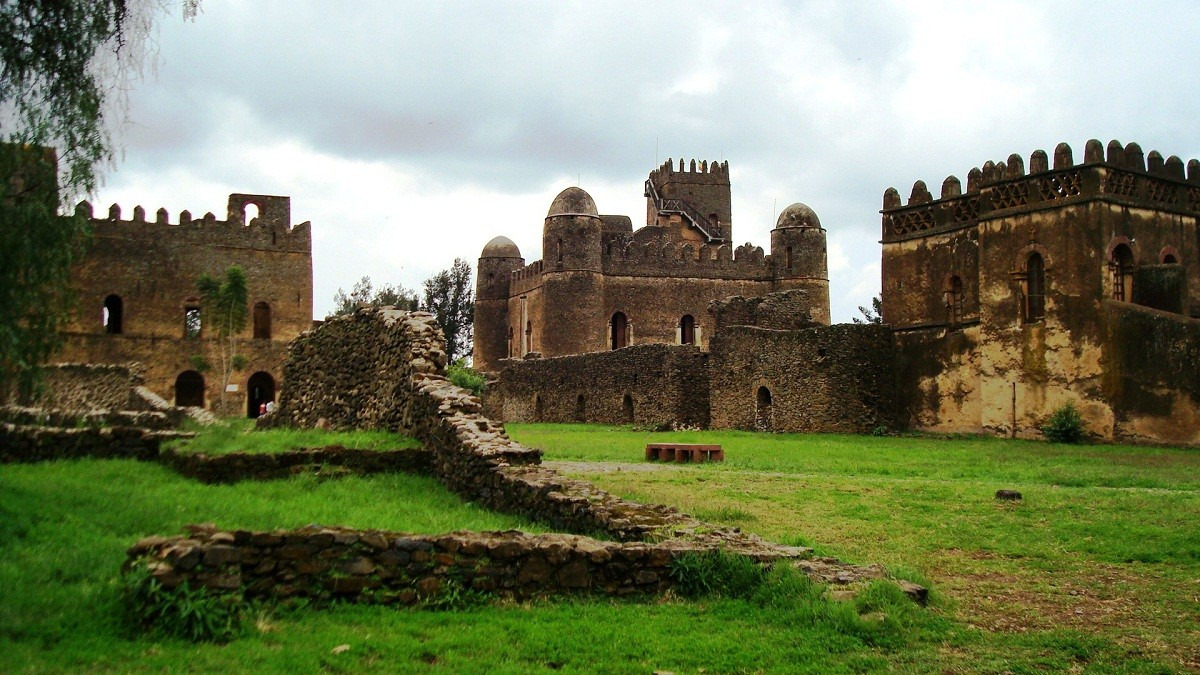
Picture a merchant ship docking at the Red Sea port of Adulis around the 4th century CE. Its cargo comes from India. The buyers speak Ge’ez. The coins exchanged carry the face of an African king. This is the Kingdom of Aksum, an empire so powerful it traded as an equal with Rome and Persia, yet today is barely mentioned outside textbooks.
The Kingdom of Aksum was not a side story in ancient history. It was one of the great powers of the ancient world, shaping trade, religion, and politics across Africa and beyond.
Where Aksum Rose and Why It Mattered
Aksum emerged in what is now northern Ethiopia and Eritrea. Its location was its first advantage. Sitting between the Nile Valley, the Red Sea, and the Indian Ocean trade routes, Aksum controlled the movement of gold, ivory, spices, iron, and enslaved labor.
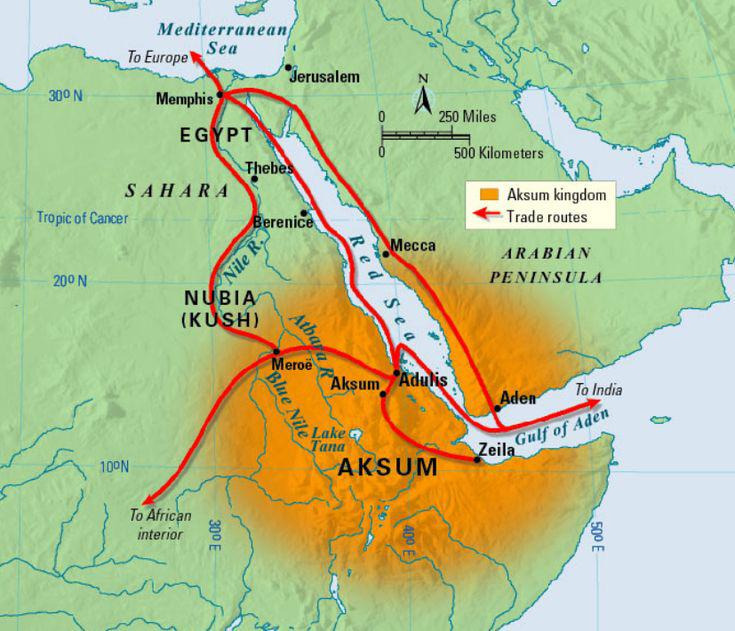
This was not accidental growth. Aksumite rulers invested heavily in ports, roads, and agriculture. Terraced farming allowed food production at high altitudes. Control of Adulis gave the empire access to global markets stretching from Byzantium to South Asia.
SEO keywords: Kingdom of Aksum, Aksum Empire location, ancient African trade routes
An African Empire That Minted Its Own Money
Aksum was the first known African kingdom south of the Sahara to mint its own coins. These were not symbolic tokens. They were gold, silver, and bronze coins used in international trade.
Coin inscriptions were written in Greek at first, signaling Aksum’s global ambitions. Later coins shifted to Ge’ez, reflecting cultural confidence and political independence. This transition tells a clear story. Aksum no longer needed outside validation.
The coins also serve as historical records. Kings like Endubis, Ezana, and Kaleb are known today largely because their faces and titles were stamped in metal.
SEO keywords: Aksumite coins, ancient African currency, King Ezana
The Tall Stones That Still Ask Questions
Aksum’s giant stone stelae remain one of Africa’s greatest architectural mysteries. Some stand over 20 meters tall. They were carved from single blocks of granite and transported without modern machinery.
These monuments marked royal tombs. Their carved doors and windows mimic multi-story buildings, suggesting an advanced understanding of architecture and symbolism. One stela collapsed during transport, frozen in time like a failed experiment.
The stelae were not just memorials. They were statements of power meant to dominate the landscape and the memory of the living.
SEO keywords: Aksum stelae, ancient African monuments, Ethiopian archaeology
When Africa Became Christian Early
In the 4th century CE, Aksum adopted Christianity under King Ezana. This happened before most of Europe. The conversion reshaped the empire’s identity and foreign alliances.
Christian symbols replaced pagan imagery on coins. Churches were built. Written records expanded. Aksum became one of the earliest Christian states in the world, alongside Armenia.
This religious shift helped Aksum build diplomatic ties with Byzantium while maintaining its African roots.
SEO keywords: Aksum Christianity, early Christian kingdoms, Ethiopian Orthodox Church origins
War, Power, and Control of the Red Sea
Aksum was not only a trading empire. It was a military power. Its armies crossed the Red Sea into southern Arabia, influencing politics in modern-day Yemen.
King Kaleb’s campaigns were driven by trade interests and religious alliances. Control of Red Sea routes meant control of wealth. Aksum understood this earlier than most empires.
At its height, the Persian prophet Mani listed Aksum among the four great powers of the world, alongside Rome, Persia, and China.
SEO keywords: Aksum military power, Red Sea empire, ancient African empires
Why the Empire Faded From View
Aksum did not collapse overnight. Environmental strain, soil exhaustion, and shifting trade routes weakened its economy. The rise of Islamic powers in the Red Sea region reduced Aksum’s control of maritime trade.
The empire gradually moved inland. Political power fragmented. What remained evolved into medieval Ethiopian states that carried Aksum’s legacy forward, even as its global influence faded.
This was not disappearance. It was transformation.
SEO keywords: fall of the Aksum Empire, ancient African decline, Ethiopian medieval history
Why Aksum Still Matters
Aksum challenges outdated ideas about Africa’s past. It proves that complex states, global trade networks, advanced engineering, and written culture thrived in Africa long before colonial contact.
Calling Aksum a lost empire misses the point. Its influence survives in language, religion, architecture, and national identity.
The real loss is how rarely its story is told with the weight it deserves.
