

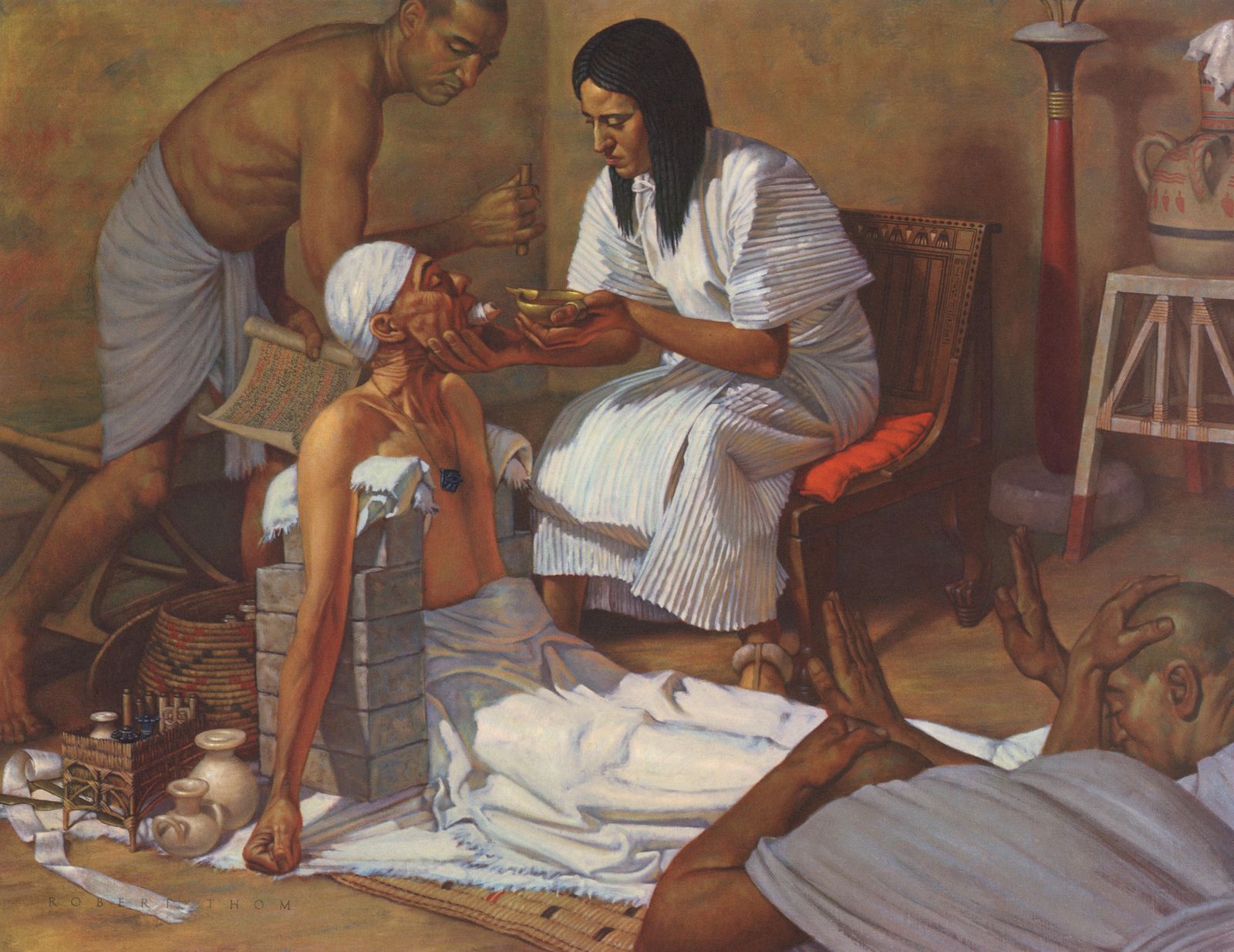
A patient lies still while a healer carefully opens the skull to relieve pressure on the brain. The tools are simple, yet the surgeon knows exactly where to cut.
This was not a modern hospital.
It was ancient Africa.
Long before the rise of modern medicine, African societies developed sophisticated healing systems that combined herbal science, surgery, spiritual knowledge, and practical observation.
In Ancient Egypt, physicians documented detailed medical knowledge on papyrus scrolls. The famous Edwin Smith Papyrus describes surgical treatments for wounds, fractures, and head injuries with remarkable precision.
The text even distinguishes between treatable conditions and those considered fatal, showing early forms of clinical diagnosis.
Brain Surgery Thousands of Years Ago
One of the most surprising discoveries in African medical history comes from archaeological evidence of trepanation.
Trepanation involves drilling or cutting a hole into the skull to relieve pressure caused by head trauma.
Skulls showing clear surgical openings have been discovered in ancient African sites, many with signs of healing. This means patients survived the procedure.
In regions of East Africa, particularly among communities around Lake Victoria, traditional surgeons performed trepanation as recently as the nineteenth century with survival rates that astonished European doctors.
The procedure required anatomical knowledge, careful handling of tools, and understanding of infection prevention.
Herbal Medicine as Scientific Knowledge
Across the continent, plant-based medicine formed the backbone of treatment.
Healers possessed deep knowledge of medicinal plants capable of reducing pain, fighting infections, and treating diseases.
In Ethiopia and Sudan, traditional medical practitioners used herbal mixtures to treat malaria-like symptoms centuries before quinine became widely known.
In Nigeria, indigenous medical systems identified plants with antibacterial properties that modern researchers are still studying today.
This knowledge was not random experimentation. It was passed down through generations of trained healers who learned to identify, prepare, and combine medicinal plants.
Surgical Skills Beyond Simple Treatment
Ancient African medicine also included complex surgical procedures.
Historical accounts describe bone setting, wound stitching, and treatment of internal injuries.
In Uganda, nineteenth-century explorers documented surgeons performing cesarean sections using banana wine as an antiseptic and herbal anesthetics to manage pain.
The procedure reportedly had a high survival rate for both mother and child, surprising European observers who witnessed it.
These operations demonstrate practical knowledge of hygiene, surgical technique, and patient care.
Community-Based Healthcare Systems
Healing in African societies rarely happened in isolation.
Traditional healers worked as part of community health systems that included midwives, herbalists, spiritual guides, and bone setters.
Midwives played a crucial role in childbirth, guiding mothers through pregnancy and delivery while using herbal remedies to prevent complications.
These community-based practices ensured healthcare knowledge spread widely rather than remaining confined to elite institutions.
Why This Medical History Matters
The story of ancient African medicine challenges long-standing myths that advanced scientific knowledge existed only outside the continent.
Evidence from archaeological discoveries, historical records, and surviving traditions shows that African societies developed sophisticated medical systems adapted to their environments.
Many modern pharmaceutical studies now revisit traditional remedies first used by African healers.
The deeper researchers look, the clearer the picture becomes.
Africa was not merely a recipient of medical knowledge.
It was one of its early innovators.
