

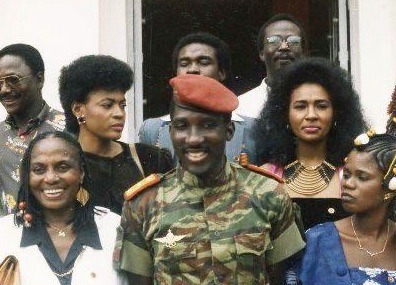
What happens when a president publicly declares that the liberation of women is not charity but a revolution?
In 1983, when Thomas Sankara seized power in Burkina Faso, he did something rare in African politics. He made women’s rights a central pillar of national transformation.
Sankara argued that no society could claim freedom while half its population remained oppressed. For him, the struggle against colonial legacy, poverty, and patriarchy were deeply connected.
One of his earliest moves was appointing women to senior government positions. Women became ministers, judges, and administrators at levels previously unseen in the country’s leadership.
The message was direct. Political power should not be reserved for men.
Ending Forced Marriage and Harmful Traditions
Sankara also confronted deeply rooted cultural practices that harmed women.
His government outlawed forced marriages and banned female genital mutilation, a bold move that challenged centuries of tradition across parts of West Africa.
These decisions were not symbolic gestures. They were enforced as national policy.
He also banned polygamy within the civil service, arguing that state leaders should model equality at home as well as in public life.
For many women in Burkina Faso, these reforms represented their first experience of legal protection and dignity.
Women in the Workforce and the Military
Sankara believed economic independence was key to women’s liberation.
He encouraged women to join professions traditionally dominated by men. Women were recruited into the military and trained as soldiers, breaking long-standing gender barriers.
In urban centers, women began driving taxis and buses, occupations previously closed to them.
Sankara even organized a symbolic national event where men were required to take over household duties for a day. The goal was simple: force society to recognize the unpaid labor women performed daily.
A Revolutionary Message to African Men
Sankara spoke bluntly about patriarchy.
He told male audiences that women’s oppression was not simply a women’s issue but a national problem. A country could not develop while half its citizens remained excluded from opportunity.
He framed women’s rights as essential to Africa’s broader liberation.
This message resonated far beyond Burkina Faso. Activists across the continent began citing Sankara’s speeches as some of the most progressive gender equality statements ever delivered by an African leader.
The Legacy That Outlived Him
The revolutionary president’s life ended abruptly during the 1987 Burkina Faso coup d’état, when he was assassinated after only four years in power.
Yet the ideas he championed continue to inspire debates on gender equality in Africa.
Many historians argue that Sankara was decades ahead of global conversations about women’s empowerment and social justice.
Even today, the policies he introduced remain a reference point for activists advocating for women’s rights across the continent.
His message was simple but radical: a true revolution must free women as well as men.
