

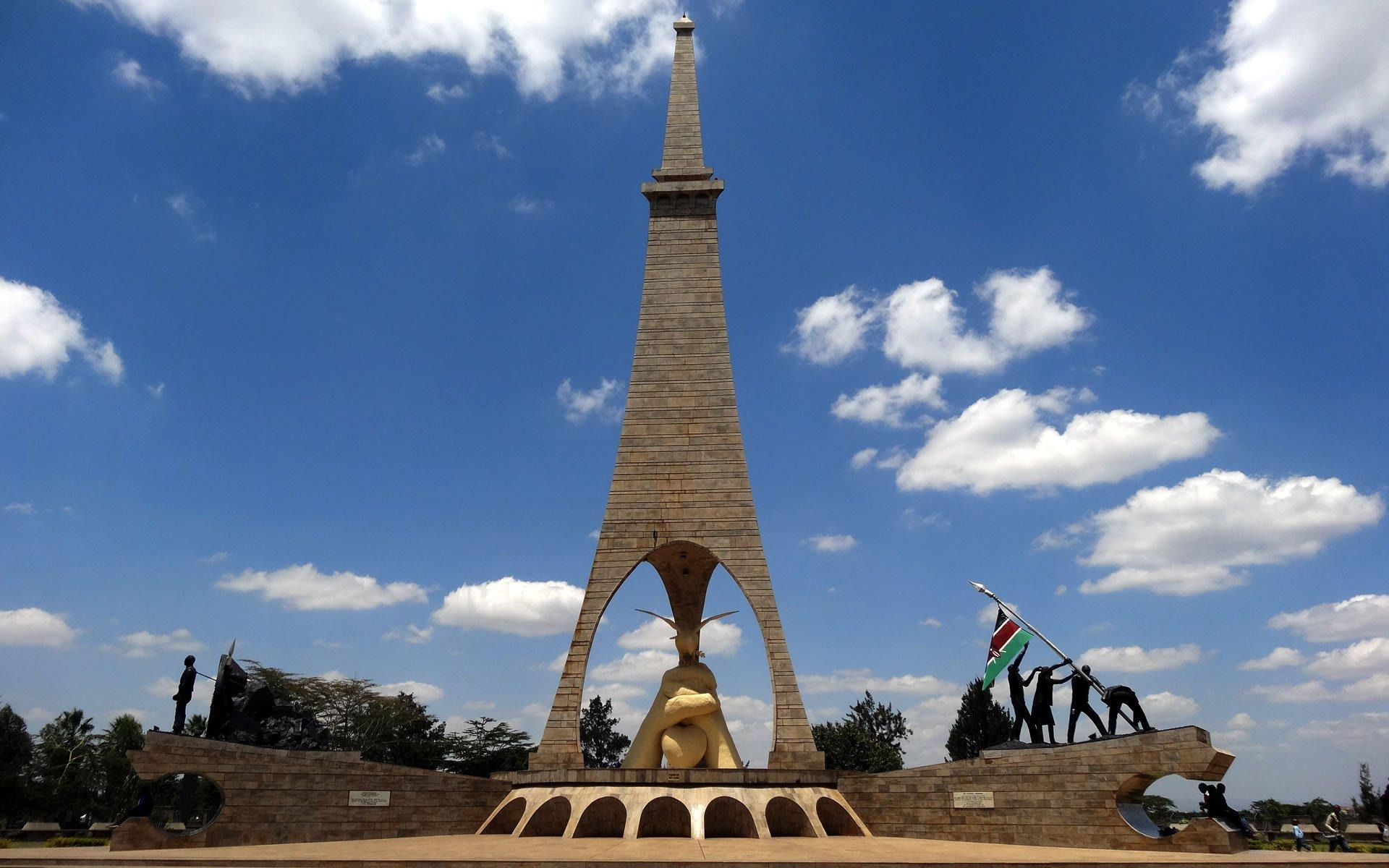
What connects October 20, 1952, to the national holiday millions of Kenyans celebrate today? Behind the colourful military parades, patriotic speeches and Kenyan flags lies a story of colonial repression, political resistance and a country’s changing understanding of heroism.
Today, Tuesday, October 20, 2026, Kenya celebrates Mashujaa Day, a national holiday dedicated to the men and women whose courage, sacrifice and contributions helped shape the country. But before it became a day for celebrating heroes from every corner of the nation, October 20 carried a much narrower political meaning.
For decades, Kenyans knew the holiday as Kenyatta Day, named after Jomo Kenyatta, the man who became independent Kenya’s first prime minister and later its first president. The transformation from Kenyatta Day to Mashujaa Day reflects a bigger question in Kenyan history: should a nation’s heroes be represented by one celebrated leader, or by the many people who helped build it?
The story begins in 1952, when Kenya was under British colonial rule. African political organisations and nationalist movements were demanding greater political representation, land rights and an end to racial discrimination. The struggle was unfolding against a deeply unequal colonial system in which European settlers controlled large areas of fertile land and Africans faced extensive political and economic restrictions.
That year, the British colonial administration declared a state of emergency in response to the Mau Mau uprising and the growing challenge to colonial authority. On October 20, 1952, colonial authorities launched a major operation known as Operation Jock Scott, arresting Jomo Kenyatta and other nationalist leaders in an attempt to weaken the independence movement.
The arrests became one of the defining episodes in Kenya’s road to independence. Kenyatta, who was associated with the Kenya African Union, was accused by the colonial government of being connected to the Mau Mau movement. He denied being a Mau Mau leader, and his trial and imprisonment became a major point of contention in the wider independence struggle.
Kenyatta was tried at Kapenguria alongside Bildad Kaggia, Fred Kubai, Paul Ngei, Kung’u Karumba and Achieng Oneko. The group became popularly remembered as the Kapenguria Six. In April 1953, they were convicted and sentenced to imprisonment, marking a dramatic moment in the colonial government’s effort to suppress nationalist leadership.
The date of their arrest, October 20, would eventually acquire national significance. What the colonial administration intended as a decisive move against political resistance became part of the history later used to commemorate Kenya’s struggle for freedom.
How Kenyatta Day Was Born
Following Kenya’s independence in December 1963, October 20 became known as Kenyatta Day. The holiday honoured Jomo Kenyatta and recalled the imprisonment of the man who had emerged as a central figure in the independence movement.
Its significance was reinforced in the early years of the new nation, when Kenyatta became a powerful symbol of freedom from British colonial rule. After serving as prime minister from 1963 to 1964, he became president when Kenya adopted a republican system in December 1964.
Kenyatta Day therefore carried two overlapping meanings. It remembered the colonial imprisonment of a nationalist leader, while also celebrating the founding president’s place in the new state. Over time, however, the holiday became closely associated with Kenyatta himself rather than the full range of people who had fought for independence.
That distinction matters because Kenya’s liberation was never the work of one individual. It involved political organisers, trade unionists, women who supported resistance networks, detained activists, rural communities, freedom fighters and ordinary people who endured the costs of colonial rule.
The Mau Mau Struggle and the Cost of Freedom
The Mau Mau uprising, which intensified in the early 1950s, was a major part of the armed struggle against British colonial rule. It drew much of its support from communities affected by land dispossession and colonial inequalities, particularly among the Kikuyu, Embu and Meru, although the wider independence movement extended far beyond those communities.
The colonial government responded with mass arrests, detention camps, forced villagisation and military operations. Thousands of Kenyans were killed during the conflict and its wider repression, while many more experienced imprisonment, displacement, torture and the loss of livelihoods. The exact death toll and the categories included in different historical estimates remain subjects of historical debate.
Yet Kenya’s independence struggle was not confined to armed resistance. Political leaders and activists also pursued constitutional reform, organised workers, mobilised communities and challenged colonial policies through public campaigns. People such as Tom Mboya, Pio Gama Pinto, Mekatilili wa Menza and Harry Thuku belong to different periods and forms of resistance, illustrating how the demand for freedom developed across generations.
The history of October 20 is therefore larger than the arrest of six men. It opens a window into the many sacrifices that helped bring about independence on December 12, 1963, and the long struggle to define what freedom would mean for the new country.
Why Kenya Renamed Kenyatta Day to Mashujaa Day
A major change came with the Constitution of Kenya, promulgated on August 27, 2010. Article 9 identifies the country’s three national days as Madaraka Day on June 1, Mashujaa Day on October 20 and Jamhuri Day on December 12.
By replacing Kenyatta Day with Mashujaa Day, the Constitution broadened the meaning of October 20. The Swahili word mashujaa means heroes, and the new name invited Kenyans to recognise the contributions of people whose stories had not always received equal attention in official national celebrations.
The change did not erase Jomo Kenyatta’s role in the independence struggle. Instead, it placed his story within a much wider national history. The date could now honour freedom fighters, political reformers, educators, public servants, athletes, artists, innovators and ordinary citizens whose work has made a lasting difference to Kenyan society.
This was also a statement about national identity. Kenya’s history belongs to more than its presidents and prominent politicians. It includes people who challenged injustice, defended communities, expanded education, fought for democratic rights and created opportunities for future generations.
Who Are Kenya’s Mashujaa?
The heroes remembered on October 20 come from different backgrounds and made their contributions in different ways. Dedan Kimathi became one of the best-known commanders of the Mau Mau armed struggle, while Mekatilili wa Menza resisted colonial authority in the Giriama community decades before the emergency of 1952.
Harry Thuku was an early nationalist figure whose activism challenged colonial labour practices and political restrictions. Tom Mboya helped shape Kenya’s labour movement and political development, while Pio Gama Pinto supported nationalist politics and was later assassinated in 1965.
Other important figures include Wangari Maathai, whose environmental activism and democratic advocacy earned her the Nobel Peace Prize in 2004, and constitutional reformers who worked to strengthen civil liberties and accountable government. Their achievements demonstrate that heroism does not end when a country wins independence.
Nor does it belong only to famous people. A teacher who opens doors for disadvantaged children, a health worker who serves an isolated community, a journalist who exposes wrongdoing and a citizen who stands against corruption can all contribute to the values Mashujaa Day represents.
What Mashujaa Day Means to Kenyans Today
For many families, October 20 is a day of rest, travel and national celebration. Official ceremonies feature military parades, speeches, cultural performances and recognition of individuals who have made notable contributions to the country. The holiday also gives schools, families and communities an opportunity to discuss Kenyan history and the meaning of public service.
But the day invites a more difficult reflection, too. If the heroes of the independence struggle demanded dignity, fairness and freedom, how well has modern Kenya honoured those ideals? Celebrating the past becomes more meaningful when it encourages citizens to examine the present.
The Constitution’s recognition of national values, including patriotism, human dignity, equity, social justice and accountability, provides a useful framework for that reflection. These values are not merely words for official speeches. They offer a standard against which public institutions, leaders and citizens can assess their actions.
The Real Lesson Behind October 20
Mashujaa Day began with a date associated with colonial arrests and a nationalist leader who later became the face of independent Kenya. Its meaning has since expanded, recognising that the country’s freedom and development were shaped by thousands of people whose sacrifices and achievements cannot be reduced to one name.
As Kenyans celebrate Mashujaa Day on October 20, 2026, the most important question may not be who deserves a place in the history books. It is whether the country is willing to recognise courage wherever it appears, including among people whose contributions are overlooked or whose actions challenge those in power.
The flags will come down, the speeches will end and the public holiday will pass. What should remain is the responsibility to build the fairer, more united and more accountable Kenya that generations of heroes hoped to create.
Happy Mashujaa Day, Kenya.
