

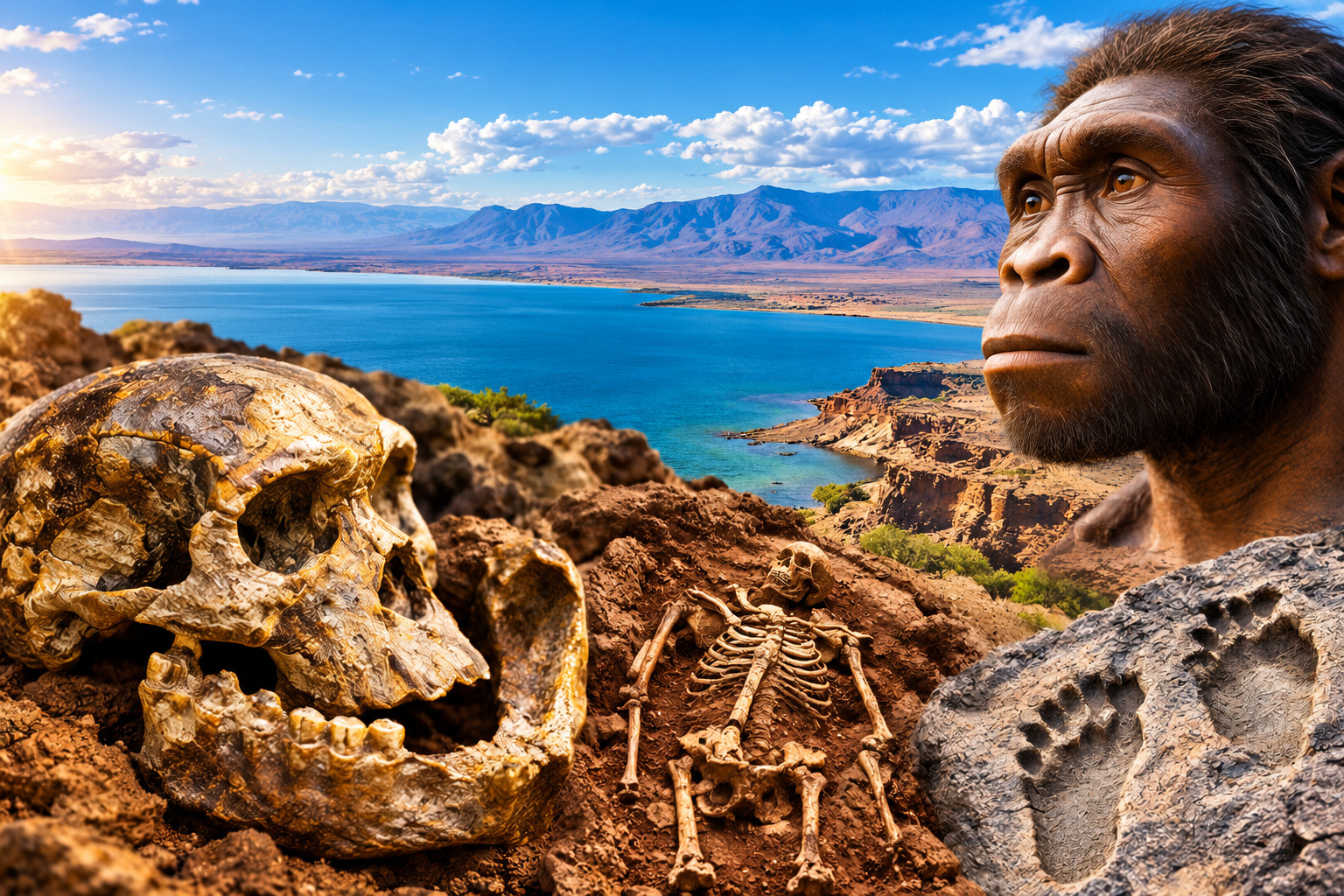
What if the dry, windswept shores of Lake Turkana are hiding one of the most important chapters in the story of humanity?
Far from looking like a traditional cradle of civilization, northern Kenya appears harsh and almost unforgiving. Yet beneath its sediments lie fossils that have transformed what scientists know about early humans, including some of the most remarkable evidence of human evolution ever discovered in Africa.
The secret is not the lake alone. It is the landscape around it. Over millions of years, rivers, lakes, volcanic activity and changing climates repeatedly buried and preserved bones, footprints, plants and animals, creating an extraordinary geological record around the Turkana Basin.
Where Human History Lies Beneath the Ground
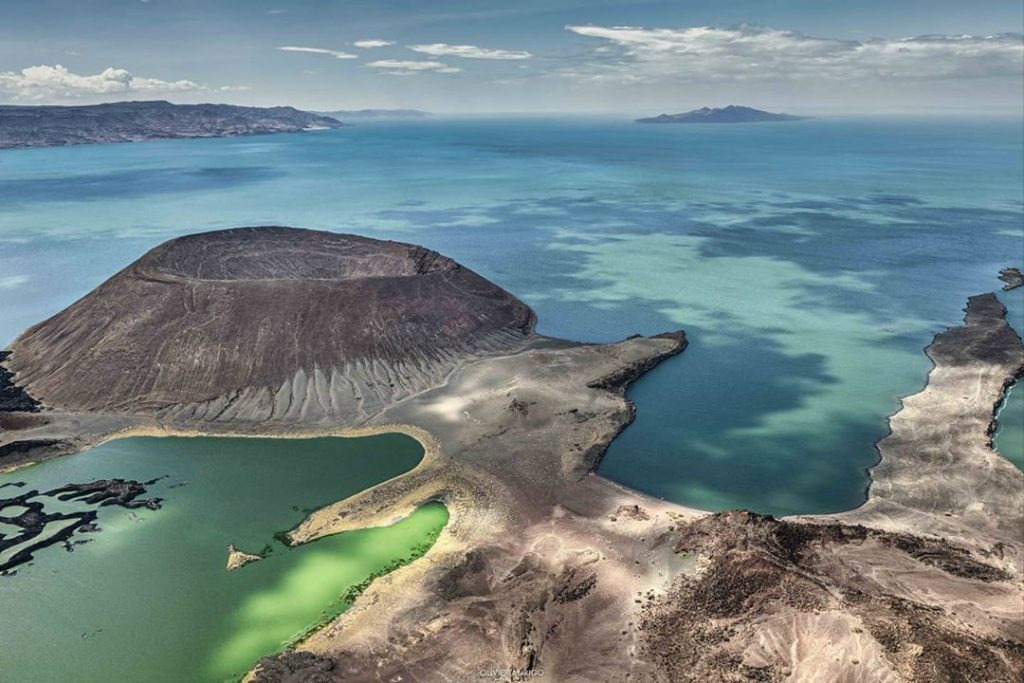
On the eastern shores of Lake Turkana sits Koobi Fora, a vast prehistoric landscape that has become one of the world’s most important sites for studying human evolution.
The National Museums of Kenya describes the area as containing layers of fluvial and lake sediments stretching from roughly five million years ago to one million years ago. Those layers effectively created a natural archive, preserving evidence from different stages of the ancient environment.
That archive contains far more than human bones. Researchers have recovered stone tools, animal fossils and plant evidence alongside hominin remains, allowing scientists to reconstruct not only what ancient humans looked like, but also the world in which they lived.
The Fossils That Changed the Story
Among the extraordinary discoveries from the Turkana region is Kenyanthropus platyops, an early human relative that lived around 3.5 million years ago.
The fossil was discovered by a team led by Meave Leakey in West Turkana in the late 1990s. Its relatively flat face and other unusual features complicated the simple idea that human evolution followed one straight line from one species to another.
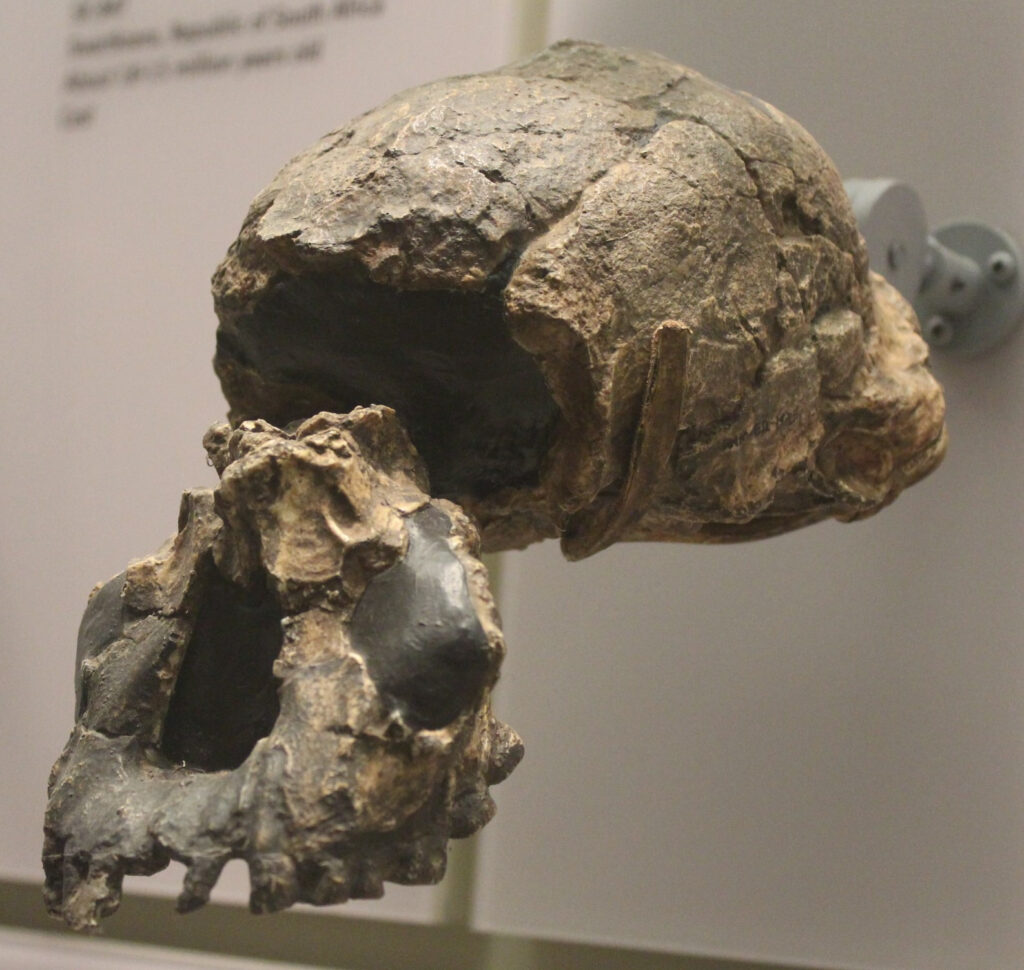
Then came fossils belonging to Homo habilis, one of the earliest members of the genus Homo. A famous Koobi Fora specimen, KNM-ER 1805, is about 1.7 million years old and consists of a cranium, upper jaw and lower jaw.
But the Turkana Basin delivered an even bigger surprise.
Turkana Boy and the Ancient Human Body
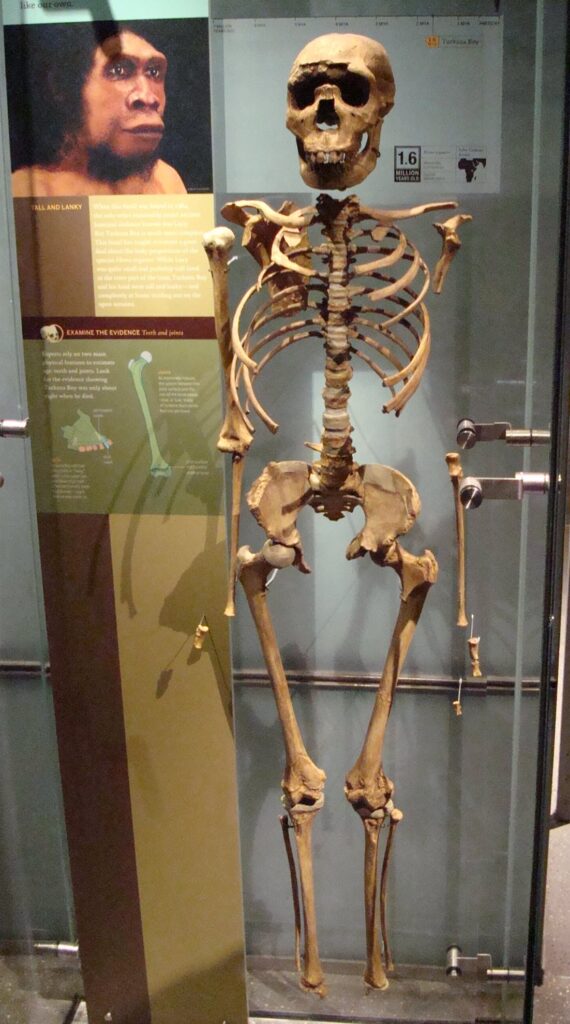
In 1984, fossil hunter Kamoya Kimeu discovered a remarkably preserved skeleton near Nariokotome, west of Lake Turkana.
Known as Turkana Boy, the individual belonged to Homo erectus and lived about 1.6 million years ago. The skeleton is approximately 40 percent complete, giving researchers an unusually detailed opportunity to study the body, growth and physical proportions of an early human relative.
Turkana Boy was probably only eight or nine years old when he died. He stood about 1.6 metres tall and had long legs and relatively narrow shoulders, body proportions that suggest strong adaptation to walking across hot, open landscapes.
His discovery also challenged the tendency to imagine early humans as primitive versions of modern humans. Homo erectus already possessed a body capable of efficient long-distance movement, used stone tools and eventually became one of the most widely distributed early human species.
The Family Tree Was Never Simple
For decades, scientists often pictured Homo habilis evolving into Homo erectus in a relatively straightforward sequence.
The Turkana Basin complicated that picture.
Fossils discovered around Ileret showed that a relatively early Homo erectus, dated to about 1.55 million years ago, existed alongside a relatively late Homo habilis dated to about 1.44 million years ago. The evidence suggests that the two species overlapped rather than one simply replacing the other.
That matters because human evolution was not a neat ladder.
It was a branching story involving several human relatives living at the same time, sometimes in the same broad landscape. Lake Turkana therefore offers something more valuable than a collection of ancient bones: it provides evidence for an evolving and sometimes crowded human family tree.
A Lake Where Different Human Relatives Walked
The story became even more intriguing when scientists began studying fossil footprints.
Research published in 2024 provided direct evidence that Homo erectus and Paranthropus boisei occupied the same immediate landscape around Lake Turkana roughly 1.5 million years ago. Their footprints were preserved in ancient lake-margin sediments, capturing movement that bones alone could never reveal.
In July 2026, researchers described another trackway from northern Kenya containing 21 footprints made by eight individuals and dated to about 1.43 million years ago.
The tracks were preserved alongside footprints belonging to animals such as hippopotamuses and antelope. The discovery offers an extraordinary snapshot of an ancient landscape where different hominins and animals moved through the same environment.
Footprints are particularly powerful because they preserve behaviour.
A skull can tell researchers about anatomy. A footprint can reveal movement, direction and, sometimes, the presence of several individuals travelling through the same place. The mud around ancient Lake Turkana therefore captured moments that happened millions of years before written history existed.
Why Lake Turkana Became Such a Fossil Treasure
The answer lies partly in geology.
The Turkana Basin experienced dramatic environmental changes over millions of years. Lakes expanded and contracted, rivers shifted their courses, volcanic eruptions deposited ash and sediments accumulated across the landscape.
When animals or early humans died and were rapidly buried under sediment, their remains sometimes escaped complete destruction. Minerals gradually replaced organic material, turning bones into fossils that could survive for millions of years.
That process turned parts of the Turkana Basin into something resembling a geological time capsule.
More Than a Story About Human Bones
The importance of Lake Turkana goes beyond proving that ancient humans lived in Kenya.
The fossils allow scientists to examine questions about climate, migration, diet, technology, body size, locomotion and competition between different species. Animal fossils and environmental evidence provide additional clues about the ecosystems that supported these early populations.
The region also reminds us that human evolution was deeply connected to environmental change.
Ancient humans did not evolve in isolation from their surroundings. They responded to landscapes that were constantly changing, moving between water sources, grasslands and other habitats while adapting physically and behaviourally to new conditions.
Africa’s Fossil Record Is Still Growing
Lake Turkana is often described as part of the “Cradle of Humankind,” but that phrase can sometimes make the story sound finished.
It is not.
Every new fossil, footprint or archaeological discovery can force researchers to reconsider assumptions about when particular species lived, how they moved and how different populations interacted. The recent footprint discoveries are a perfect example because they reveal behaviour that cannot be reconstructed from skulls alone.
And that is perhaps the most fascinating lesson from Lake Turkana.
The ground beneath northern Kenya is not simply holding the remains of the past. It is holding unanswered questions.
Somewhere beneath the sediments of the Turkana Basin may still be another skull, another footprint or another fragment of bone capable of changing the human story again.
For millions of years, the landscape kept those secrets.
Scientists are still learning how to read them.
