

What if Africa had chosen political unity before colonial borders became permanent?
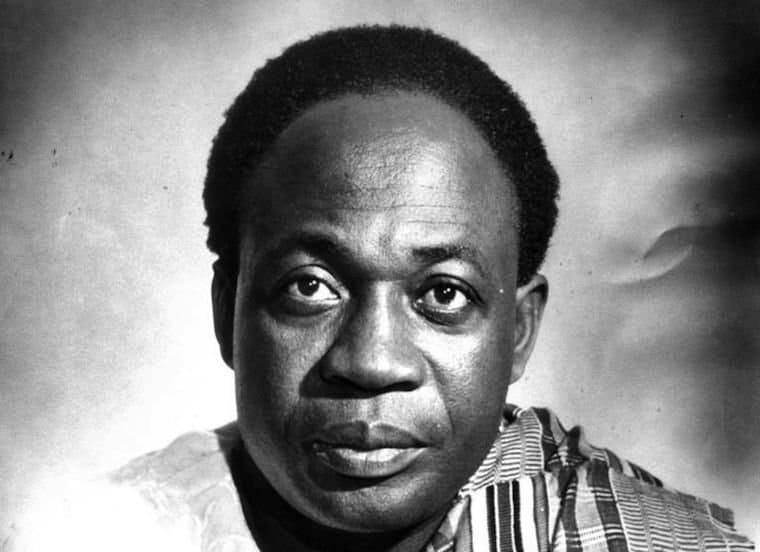
Kwame Nkrumah believed that question could not be ignored.
Ghana’s first Prime Minister and later President was more than a leader who guided his country to independence. He became one of the strongest voices for Pan-Africanism, arguing that African countries would remain vulnerable if they fought for development separately.
From Ghana’s Independence to a Continental Vision
When Ghana gained independence from British colonial rule on 6 March 1957, Nkrumah understood that the moment was bigger than Ghana.
He famously declared that Ghana’s independence would have little meaning unless it was connected to the wider liberation of Africa.
For Nkrumah, independence was not simply about replacing a European flag with an African one. It was about political freedom, economic control, cultural confidence and African solidarity.
His message resonated across a continent still largely under colonial rule.
Nkrumah and the Dream of a United Africa
Nkrumah believed that Africa’s newly independent states could become economically and politically weak if they remained divided.
Colonial governments had drawn borders that separated communities, economies and trade routes.
Nkrumah wanted African nations to overcome those divisions through cooperation and eventually political union.
He imagined a continent capable of coordinating its foreign policy, defence and economic development.
His famous argument was simple but radical: Africa needed unity to protect its independence.
That idea became one of the foundations of modern Pan-African thought.
Helping Inspire African Liberation
Nkrumah did not limit his attention to Ghana.
His government supported African liberation movements and offered assistance to activists fighting colonial rule and apartheid.
Accra became an important meeting point for African nationalists, intellectuals and independence activists.
Leaders from across Africa could look to Ghana as evidence that colonial rule could be defeated.
Nkrumah also helped strengthen the political and intellectual networks that eventually contributed to the creation of the Organization of African Unity (OAU) in 1963.
The OAU later became the African Union, which continues to promote continental cooperation.
The Economic Side of Pan-Africanism
Nkrumah understood that political independence without economic independence could leave African countries trapped in another form of dependence.
He warned against a system in which African states possessed flags and governments but remained economically controlled from outside.
This became central to his thinking about neo-colonialism.
In his 1965 book Neo-Colonialism: The Last Stage of Imperialism, Nkrumah argued that foreign economic and political influence could continue shaping African countries even after formal colonialism had ended.
That argument remains influential in debates about Africa’s natural resources, foreign investment, debt, trade and economic sovereignty.
Why Nkrumah Still Matters
More than half a century after his death, Nkrumah’s ideas continue to appear in conversations about African unity, Pan-Africanism and continental development.
The African Union reflects part of the institutional dream he championed.
The African Continental Free Trade Area also speaks to his belief that African countries could gain greater economic strength by trading and working more closely with one another.
But Nkrumah’s legacy is not without controversy.
His government faced political opposition, economic difficulties and criticism over his increasingly centralized style of leadership.
He was overthrown in a military coup in 1966 while visiting China.
Yet the fall of his government did not end the influence of his ideas.
The Question Nkrumah Left Africa
Nkrumah’s greatest legacy may not be a single institution or political achievement.
It may be the question he forced Africans to confront:
Can a continent divided into dozens of states become truly powerful without finding ways to act together?
That question remains relevant whenever Africans debate free trade, regional integration, border restrictions, foreign influence, natural resources and the future of the African Union.
Kwame Nkrumah wanted Africans to think beyond the boundaries inherited from colonialism.
His dream of a politically united Africa remains unfinished.
