

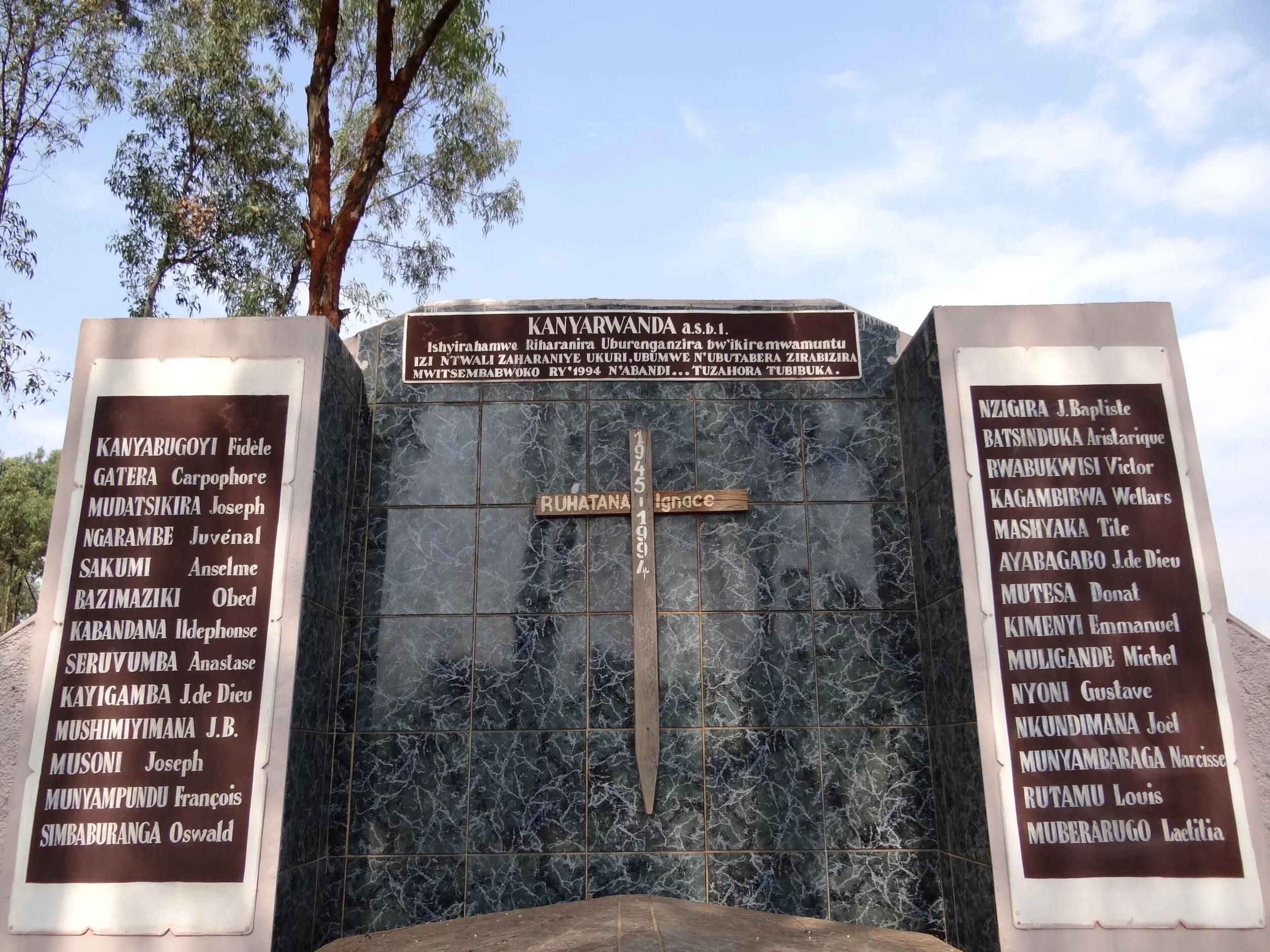
How does a country rebuild when the people who survived the violence must continue living beside those accused of causing it?
To understand modern Rwanda, you have to travel back to the country that existed before April 1994.
You also have to confront the 100 days that followed.
And finally, you have to look at what Rwanda did after the killing stopped.
This is not simply a story about genocide.
It is a story about how a society can be destroyed, how survivors seek justice, and how a country attempts to rebuild after unimaginable loss.
Rwanda Before 1994: A Country Already Under Pressure
Long before the genocide, Rwanda had a complicated social and political history.
Hutu, Tutsi and Twa communities shared a language, culture and many traditions. The social categories were real, but they were not always the rigid political identities they later became.
The colonial period changed that.
German and Belgian authorities reinforced ethnic classifications, and under Belgian rule ethnic identity was incorporated into official administration and identity documents. Political power and social status increasingly became tied to these categories.
After independence in 1962, Rwanda experienced repeated political violence and displacement.
Hundreds of thousands of Tutsis fled the country during waves of violence in the 1960s and 1970s.
By 1990, Rwanda was already carrying decades of political tension when the Rwandan Patriotic Front, largely composed of Tutsi refugees and their descendants, launched a military offensive from Uganda.
War, economic difficulties and extremist propaganda pushed the country even closer to disaster.
Then came April 1994.
The 100 Days That Destroyed a Nation
On the evening of April 6, 1994, the plane carrying President Juvénal Habyarimana was shot down as it approached Kigali.
Who fired the missile remains disputed.
But extremist leaders quickly used the assassination as the trigger for a campaign of mass killing.
Tutsi civilians were systematically targeted.
Moderate Hutu politicians and others who opposed the extremists were also murdered.
Roadblocks appeared across the country.
Radio broadcasts spread hatred and encouraged violence.
People hid in churches, schools, homes and fields, hoping these places would protect them.
Many did not.
The killings spread rapidly through towns and villages, and entire families were wiped out.
Between 500,000 and one million people were killed in roughly 100 days, overwhelmingly Tutsi.
The international community had received warnings before the genocide, including a January 1994 warning from UN force commander Roméo Dallaire about preparations for mass violence.
The warnings were not followed by an effective international response capable of stopping the catastrophe.
The genocide ended in July 1994 when the Rwandan Patriotic Front defeated the genocidal government and captured Kigali.
But stopping the killing did not mean Rwanda was suddenly healed.
It meant the next battle was beginning.
July 1994: What Was Left Behind?
Imagine walking back into your neighbourhood after 100 days of violence.
Your house may still be standing.
But your neighbours may be gone.
Your relatives may be missing.
The local school may have become a killing site.
The church that once represented safety may carry memories of massacre.
And the people you meet may include survivors, witnesses, returnees and people accused of participating in the genocide.
That was the Rwanda that emerged in 1994.
The country faced mass displacement, destroyed infrastructure, shattered institutions and an enormous justice crisis.
More than 100,000 genocide suspects were initially awaiting trial, creating a judicial backlog that ordinary courts could not realistically handle on their own.
Rwanda therefore had to answer a question with no easy solution:
How do you deliver justice when the crime has involved an entire society?
Gacaca: Taking Justice Into the Community
One of Rwanda’s most distinctive responses was Gacaca, a community-based justice system inspired by traditional dispute-resolution practices.
Beginning in the early 2000s, locally selected judges heard enormous numbers of genocide-related cases.
Victims and witnesses could speak.
Accused people could respond.
Confessions and apologies could influence sentences.
The system was not a replacement for every form of justice. The most serious cases, including those involving the planning of genocide, remained within other judicial systems.
By the time Gacaca courts closed in 2012, they had processed more than 1.2 million cases.
That number reveals the extraordinary scale of the challenge Rwanda faced after 1994.
But justice was only one part of reconstruction.
Rwanda Had to Rebuild More Than Buildings
Roads could be reconstructed.
Government offices could be rebuilt.
Schools could reopen.
But trust was harder.
A survivor could not simply forget what happened because a new building had appeared.
Rwanda therefore placed significant emphasis on national unity, reconciliation, education, healthcare and economic reconstruction.
The country also promoted a national identity centred on being Rwandan, rather than allowing ethnic labels to dominate public life as they had before the genocide.
That approach remains one of the defining features of post-genocide Rwanda.
From Ruins to a Different Rwanda
More than three decades later, Rwanda is dramatically different from the country that emerged from the genocide.
Kigali has developed into a major urban and business centre.
The country has made substantial progress in rebuilding infrastructure and expanding public services, while positioning itself as a destination for tourism, investment and international conferences.
But Rwanda’s transformation should not be reduced to a simple miracle story.
The country also continues to face debates about political freedoms, human rights, governance and the space available to political opposition.
Those questions are important because reconstruction is never only about economic growth.
It is also about what kind of society emerges from the ruins.
The Biggest Lesson From Rwanda
The Rwanda story has three chapters.
Before the 100 days, political divisions and extremist ideology were deepening.
During the 100 days, those divisions became a genocide that killed hundreds of thousands of people.
After the 100 days, survivors and a new government faced the enormous task of justice, reconciliation and rebuilding.
That is why the history of Rwanda cannot end with the number of people who died.
The more difficult story begins with those who survived.
They had to raise children.
Return to work.
Rebuild homes.
Bury relatives.
Seek justice.
And, in many cases, continue living in communities where the memories of 1994 remained painfully close.
Rwanda’s post-genocide journey does not offer a perfect formula for rebuilding a country.
It offers something more valuable: a warning about how quickly political hatred can become mass violence, and a powerful example of how difficult reconstruction becomes after trust has been destroyed.
The question is no longer only what happened during Rwanda’s 100 days?
It is this:
What does a nation do on Day 101?
