

What if your success meant nothing unless your community succeeded too?
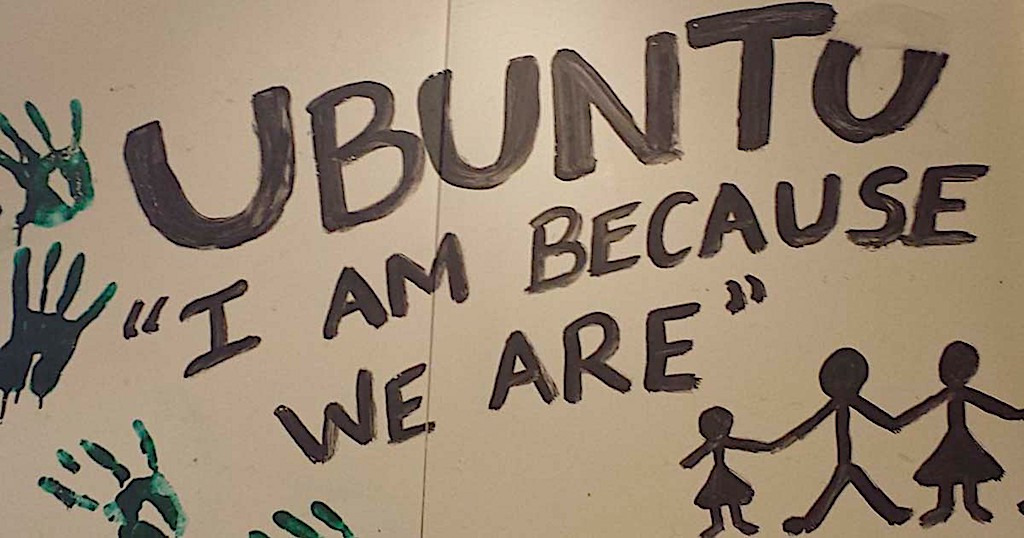
That simple question sits at the heart of Ubuntu, one of Africa’s most profound philosophies. While often translated as “I am because we are,” Ubuntu is far more than a popular quote shared online. It is a way of seeing humanity itself.
Across many African societies, Ubuntu teaches that a person becomes fully human through their relationships with others. Identity is not built in isolation. It grows through kindness, compassion, respect, and shared responsibility.
Imagine a village where a child belongs not only to their parents but to the entire community. If one family struggles, neighbors step in. If someone achieves success, the victory is celebrated collectively. That spirit reflects Ubuntu in action.
The philosophy has roots in several Southern African cultures and languages, including Zulu and Xhosa traditions. Yet its message resonates across the African continent, where community, solidarity, and collective well-being have long shaped social life.
Ubuntu gained global attention through leaders like Desmond Tutu and Nelson Mandela. Both used the philosophy to promote healing and reconciliation after apartheid. Instead of revenge, Ubuntu encouraged understanding, forgiveness, and rebuilding a fractured nation.
But Ubuntu is not only about politics. It influences everyday life. It can be seen when strangers help one another during difficult times, when communities come together after disasters, or when elders pass wisdom to younger generations without expecting anything in return.
In a world increasingly focused on individual achievement, Ubuntu offers a different perspective. It reminds us that wealth without community, knowledge without empathy, and success without service leave something important missing.
Many African scholars argue that Ubuntu represents one of Africa’s greatest contributions to global thought. It challenges societies to ask a powerful question: How can we thrive if those around us are struggling?
The enduring strength of Ubuntu lies in its simplicity. Human beings are connected. Our lives are intertwined. When we lift others, we also lift ourselves.
That is the timeless lesson Ubuntu continues to teach Africa and the world.
